Understanding Tanzania Tourism Business License Fee Structure and It’s Implications for the Industry

Tanzania’s tourism sector continues to evolve in response to market realities, investment patterns, and the need for fair and sustainable regulation. One of the most significant recent developments affecting tour operators is the Tanzania Tourism Business License (TTBL) fee structure of 2018, as outlined in the current licensing guidelines. These changes introduce a more differentiated and size-based approach to licensing fees, replacing the long-standing flat-rate system that applied uniformly regardless of business scale.
This reform marks an important shift toward equity, competitiveness, and better alignment between regulatory costs and operational capacity within the tourism industry.
From Flat Fees to a Tiered Licensing Model
Historically, the Tanzania Tourism Business License Fee (TTBL) system applied a single flat fee to operators, regardless of fleet size or operational scale. Under the previous arrangement, foreign tour operators paid USD 5,000 per year, while local tour operators paid USD 2,000 per year, irrespective of whether they operated a few vehicles or large fleets. While administratively simple, this structure posed challenges, particularly for smaller local operators and growing mid-sized businesses, as it did not adequately reflect differences in capacity, investment, or market reach.
The revised structure introduces a tiered fee model, categorizing operators based on the number of vehicles they operate. This change is designed to promote fairness, support local entrepreneurship, and ensure that licensing costs are proportionate to business size.
Key Features of the Current Tanzania Tourism Business License Fee (TTBL) Fee Structure
Under the new framework, foreign tour operators are now licensed according to fleet size. Operators with 10 to 30 vehicles are required to pay a Tanzania Tourism Business License Fee (TTBL) fee of USD 5,000 per year. Those operating 31 to 50 vehicles pay USD 7,500 per year, while operators with 51 vehicles and above are required to pay USD 10,000 annually. This recognizes the higher market share, revenue potential, and infrastructure associated with large-scale foreign operators.
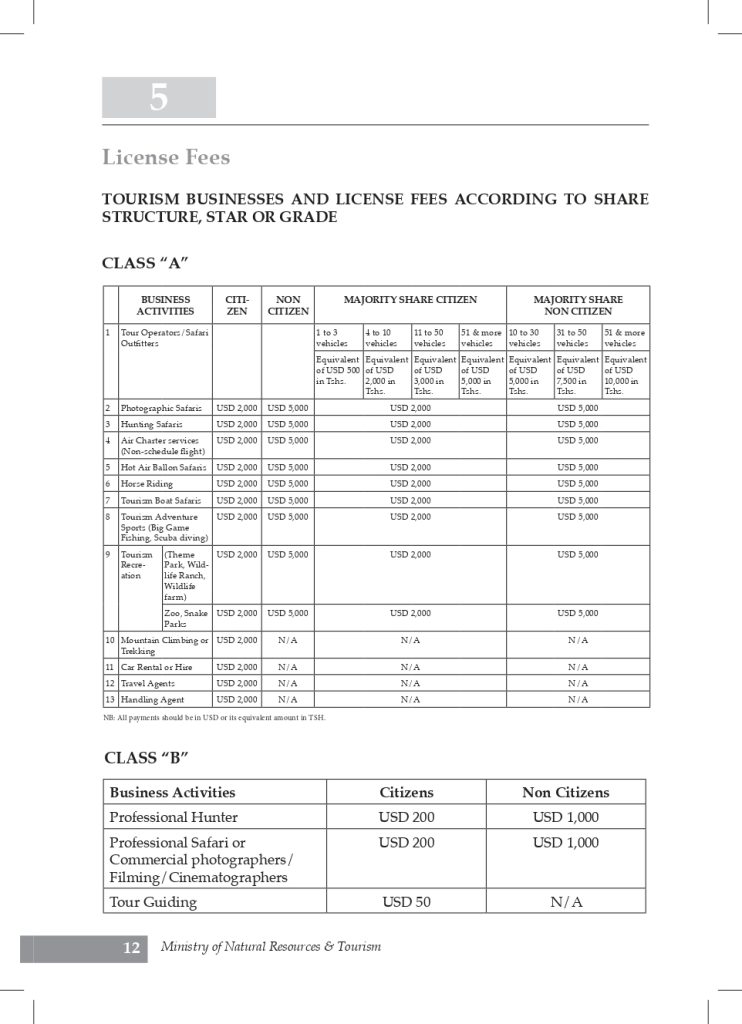
For local tour operators, the structure is more progressive and supportive of growth. Operators with 1 to 3 vehicles pay USD 500 per year, significantly lowering the entry barrier for small and emerging businesses. Those operating 4 to 10 vehicles pay USD 2,000, while operators with 11 to 50 vehicles pay USD 3,000. Local operators with 51 vehicles and above are required to pay USD 5,000 per year.
This approach reflects a policy intention to encourage formalization, expansion, and competitiveness among Tanzanian-owned tourism enterprises while maintaining regulatory oversight.
Implications for Today’s Tourism Industry in Tanzania
The revised TTBL fee structure comes at a time when tourism remains one of Tanzania’s most critical economic pillars. The sector contributes significantly to foreign exchange earnings, employment creation, government revenue, and community livelihoods, directly and indirectly supporting millions of Tanzanians.
By aligning licensing fees with operational scale, the government is creating a more enabling environment for small and medium-sized tour operators, who form the backbone of the industry. Lower entry-level fees for local operators reduce compliance pressure, improve cash flow, and allow businesses to reinvest in quality, safety, staff training, and vehicle standards.
At the same time, the higher tiered fees for large operators recognize the greater market access and earning potential of high-capacity businesses, ensuring a more balanced contribution to sector regulation and administration.

TATO’s Role in Advocacy and Industry Alignment
The Tanzania Association of Tour Operators (TATO) has consistently played a central role in policy dialogue, advocacy, and stakeholder engagement around tourism regulation, including licensing and fee structures. Throughout the review and implementation of licensing frameworks, TATO has represented the collective voice of tour operators, ensuring that reforms balance government objectives with business sustainability.
TATO continues to engage closely with the Ministry of Natural Resources and Tourism, regulatory authorities, and licensing bodies to promote transparency, clarity, and consistency in the application of the Tanzania Tourism Business License Fee (TTBL) structure. This includes supporting members to understand licensing requirements, compliance procedures, and the implications of fleet-based categorization.
Beyond advocacy, TATO also provides capacity building, information sharing, and compliance guidance to its members, helping operators adapt smoothly to regulatory changes while maintaining high professional and operational standards.
Promoting Fair Competition and Sustainable Growth
One of the key benefits of the revised Tanzania Tourism Business License Fee (TTBL) framework is its potential to enhance fair competition within the tourism sector. By differentiating fees based on fleet size, the system discourages informal operations, reduces distortions caused by one-size-fits-all pricing, and creates incentives for gradual, structured growth.
For local operators, especially new entrants and small businesses, the lower initial licensing costs make formal registration more attainable. This supports broader national objectives of private sector development, local ownership, and inclusive economic growth.
For international operators, the structured fees reinforce accountability and alignment with Tanzania’s long-term tourism development goals, while still maintaining access to one of Africa’s most iconic destinations.

Looking Ahead: The Importance of Continuous Dialogue
As tourism markets evolve and operational models change, licensing frameworks must remain responsive and evidence-based. TATO emphasizes the importance of continuous consultation between the public and private sectors to ensure that licensing policies remain fair, competitive, and supportive of investment.
The Association remains committed to working with government institutions to monitor the impact of the revised Tanzania Tourism Business License Fee (TTBL) structure, address emerging challenges, and propose improvements where necessary. Such collaboration is essential to maintaining Tanzania’s reputation as a well-regulated, investor-friendly, and sustainable tourism destination.
Conclusion
The current Tourism License Fee Structure represents a meaningful step toward a more equitable and growth-oriented regulatory environment for Tanzania’s tourism industry. By moving away from flat fees and embracing a tiered, capacity-based model, the framework supports small operators, promotes compliance, and strengthens the overall resilience of the sector.
Through its advocacy, engagement, and member support, TATO continues to play a vital role in ensuring that licensing reforms contribute positively to the development of tourism in Tanzania. As the industry grows and diversifies, such balanced policies will remain critical in sustaining tourism’s contribution to the national economy and positioning Tanzania competitively on the global stage.
