TATO Chairperson Wilbard Chambulo Calls for Stronger Digital Tax Education at 46th CATA Conference in Arusha

TATO Representation Highlights the Importance of Taxpayer Education, Cashless Transactions and Digital Systems in Strengthening Revenue Collection During 46th CATA Conference in Arusha
Tanzania Association of Tour Operators (TATO) has joined senior tax administrators, government officials, revenue experts and other stakeholders from across the Commonwealth at the 46th Commonwealth Association of Tax Administrators (CATA) Annual Heads Meeting and Technical Conference, being held in Arusha from October 5–9, 2026.
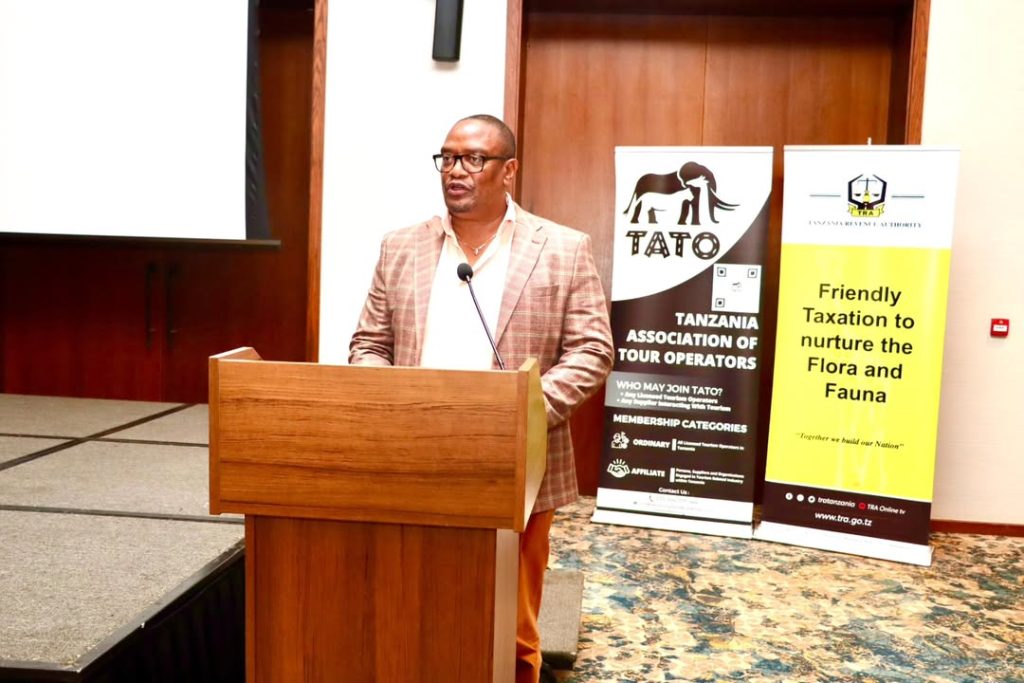
TATO is represented at the high-level conference by its Chairperson, Mr. Wilbard Chambulo, who used the platform to underscore the importance of taxpayer education, digital payment systems and the transition towards a cashless economy as Tanzania strengthens domestic revenue mobilisation.
The conference, hosted by the Tanzania Revenue Authority (TRA) at Gran Meliá Arusha, brings together tax administrators and experts to discuss how technology can improve tax administration, increase compliance and strengthen revenue collection. The official conference programme places particular emphasis on digital taxation, technology-enabled administration, support for small and medium-sized enterprises, transformation of the informal sector and maintaining taxpayer morale during digitalisation.
The conference is being held under the theme “Leveraging Technology for Efficient Revenue Collection,” bringing together representatives from Commonwealth tax administrations and partner organisations to exchange experiences and explore practical approaches to modernising revenue systems.
The opening ceremony was officiated by Tanzania’s Vice President, Hon. Deogratius John Ndejembi, on October 6, 2026. In his remarks, the Vice President emphasised the importance of modern technology in improving revenue collection, strengthening transparency and making tax payment easier for taxpayers. He also noted that technology alone cannot deliver successful tax administration without supportive, predictable policies and effective administration.
TATO Brings the Tourism Sector Perspective to the Tax Dialogue
TATO’s participation in the 46th CATA Conference in Arusha reflects the growing importance of ensuring that the voice of the tourism private sector is represented in discussions surrounding taxation, digitalisation and domestic revenue mobilisation.
Speaking during the conference, TATO Chairperson Mr. Wilbard Chambulo emphasised that improving tax compliance should go hand in hand with continuous taxpayer education.
He called for stronger and more frequent public education on tax payments, particularly as businesses and consumers increasingly interact with government systems through digital channels.
For Chambulo, technology should not simply be viewed as a tool for government to collect more revenue. It should also be used to make compliance easier, more transparent and more practical for businesses and citizens.
His intervention highlighted an important principle: the easier it is for businesses to comply and for consumers to participate in the tax system, the stronger the foundation for voluntary compliance becomes.
This is particularly relevant to Tanzania’s tourism sector, where businesses operate across a diverse ecosystem involving tour operators, accommodation facilities, transport providers, attractions, restaurants, travel agents, guides and numerous small and medium-sized enterprises.
Many tourism transactions involve multiple service providers and customers, including international travellers. As the sector continues to digitise its booking, payment, accounting and customer-management processes, there is significant potential for technology to make tax compliance more seamless and transparent.

Mr Chambulo Advocates for a Cashless Economy
A central point raised by the TATO Chairperson was the importance of moving towards a cashless economy.
Chambulo argued that reducing dependence on cash transactions can make economic activity easier to track while strengthening transparency in revenue collection.
For a tourism destination such as Tanzania, this has particular significance.
International tourists increasingly expect to be able to make payments digitally, whether for accommodation, transportation, activities, park-related services, restaurants or other tourism experiences. Businesses, meanwhile, increasingly depend on electronic booking platforms, bank transfers, mobile payments, cards and other digital financial tools.
A stronger cashless economy can therefore provide benefits beyond tax administration. It can support business efficiency, improve transaction records, strengthen accountability and give businesses better visibility over their financial operations.
At the same time, the transition needs to be accompanied by appropriate infrastructure, affordable payment solutions, taxpayer education and systems that are simple enough for businesses of different sizes to use.
Chambulo’s intervention therefore placed the discussion within the broader question of how Tanzania can create a tax environment where compliance becomes a normal and convenient part of doing business.
“Technology Can Make Every Consumer a Partner in Revenue Collection”
The TATO Chairperson captured his position by stressing the need to make technology work for both businesses and citizens.
“Technology can make every consumer a partner in Revenue collection, let us make it easy for businesses to issue EFD receipts and worthwhile for citizens to demand them.”
The statement highlights the importance of the relationship between businesses, consumers and the tax administration.
Electronic Fiscal Devices (EFDs) can provide an important link between commercial transactions and tax administration. However, technology can only deliver its full potential when businesses understand the systems, consumers understand their role and the process of issuing and requesting receipts is convenient.
This is why taxpayer education remains critical.
Rather than relying only on enforcement, sustained education can help businesses understand their obligations, explain the benefits of compliance and encourage consumers to actively participate by requesting proper receipts.
The approach also aligns with the broader direction of Tanzania’s tax administration reforms. TRA has been strengthening digital tax services and systems designed to make tax administration more convenient while improving its ability to identify and address non-compliance.
Why Digital Tax Administration Matters to Tanzania’s Tourism Industry
The discussion at 46th CATA Conference in Arusha is particularly relevant to tourism because the sector is one of the country’s most internationally connected industries.
Tourism businesses interact with domestic and international customers every day. They also work across multiple payment channels and business platforms.
A tourist planning a safari, for example, may communicate with a tour operator online, pay through a bank or digital platform, receive electronic documentation and then purchase additional services during the trip using a card or mobile payment.
As these transactions become increasingly digital, the tourism sector has an opportunity to support a more transparent and traceable economic environment.
For tourism operators, effective digital tax administration can also reduce some of the administrative burdens associated with compliance.
When tax systems are well integrated, businesses can potentially spend less time navigating fragmented processes and more time focusing on their core operations, customer service and destination development.
However, digital transformation must be accompanied by clarity, accessibility and dialogue.
This is where industry associations such as TATO have an important role to play.

The Role of TATO: Promoting a Better Tax Environment for Tourism
TATO’s participation in the 46th CATA Conference in Arusha demonstrates the Association’s broader role as a bridge between Tanzania’s tourism private sector and public institutions.
The participation of TATO leadership at a high-level international tax conference such as 46th CATA Conference in Arusha therefore creates an opportunity to ensure that the tourism industry’s operational realities are considered in conversations about digital taxation and domestic revenue mobilisation.
1. Representing the Tourism Private Sector
TATO brings the perspectives of tourism operators into policy discussions that directly or indirectly affect the sector.
2. Supporting Dialogue with Government
The Association provides a platform for constructive engagement between tourism businesses, government institutions and other stakeholders on matters affecting the operating environment.
3. Promoting Taxpayer Education
TATO can help communicate tax-related information, policy developments and compliance requirements to its members, supporting better understanding of obligations across the tourism industry.
4. Encouraging Digital Transformation
The Association can encourage tourism businesses to adopt appropriate digital systems for payments, financial management, documentation and other business processes that support transparency and efficiency.
5. Advocating for Practical Business-Friendly Systems
TATO can provide industry feedback on tax administration and digital systems, helping ensure that reforms consider the practical realities faced by tourism businesses operating across different destinations.
6. Supporting Sustainable Tourism Growth
By contributing to discussions around taxation and economic policy, TATO supports an operating environment that enables tourism businesses to remain competitive while contributing to national revenue and economic development.
Building Trust Between Taxpayers and Government
One of the broader issues emerging from the 46th CATA Conference in Arusha discussions is the importance of trust.
Tax compliance is not only about enforcement. It is also about creating an environment in which businesses understand what is expected of them, have confidence in the systems available to them and can see the connection between compliance and national development.
Tanzania’s tax administration has been pursuing reforms aimed at improving voluntary compliance and taxpayer services.
For the private sector, this creates an important opportunity for continued engagement.
The tourism industry is constantly evolving. New digital booking platforms, online payments, international marketing channels and changing consumer behaviour are transforming how tourism businesses operate.
Tax administration must evolve alongside this transformation.
Continuous dialogue can help identify practical challenges before they become major obstacles to compliance.
It can also help government understand how proposed systems affect businesses operating in different parts of the country, including operators working in remote tourism destinations where connectivity and digital infrastructure can sometimes present additional challenges.
Through constructive engagement, TATO can continue to provide industry feedback while encouraging its members to embrace lawful and transparent business practices.
Technology as a Tool for Voluntary Compliance
The 46th CATA Conference’s focus on technology comes at an important moment for Tanzania.
Digitalisation is changing how governments interact with taxpayers around the world. Tax registration, filing, payment, invoicing, data analysis and compliance monitoring are increasingly moving online.
The challenge is ensuring that these systems are designed around the needs of users.
For businesses, this means systems that are reliable, accessible and easy to understand.
For consumers, it means making digital transactions simple and ensuring that people understand the importance of requesting receipts.
For government, it means using data responsibly to improve compliance, identify gaps and strengthen revenue collection.
For industry associations, it means helping their members understand the transformation and ensuring that legitimate business concerns are communicated to policymakers.
This is precisely why the intervention by TATO at the 46th CATA Conference in Arusha is significant.
TATO Continues to Champion Tourism Private Sector Engagement
TATO’s representation at the 46th CATA Conference , Annual Heads Meeting and Technical Conference demonstrates the Association’s commitment to ensuring that tourism operators remain part of important national economic policy discussions.
Mr. Wilbard Chambulo’s call for stronger taxpayer education, wider adoption of cashless transactions and easier access to EFD systems reflects the industry’s interest in building a transparent and sustainable business environment.
His central message that technology can transform consumers into active partners in revenue collection also points to a broader future for Tanzania’s tax system.
As Tanzania continues to digitalise its economy, the success of revenue mobilisation will increasingly depend not only on sophisticated systems, but on how effectively those systems connect government, businesses and citizens.
For the tourism sector, TATO will continue to play an important role in that conversation by bringing the industry’s experience to the table, encouraging responsible compliance among its members, advocating for practical business-friendly systems and strengthening dialogue between tourism stakeholders and government institutions.
The 46th CATA conference in Arusha therefore represents more than a meeting of tax administrators. It is part of a wider conversation about how technology, trust, education and collaboration can help build a more efficient revenue system and how Tanzania’s private sector, including tourism, can contribute to that national objective.


