Tanzania to Implement Mandatory Inbound Travel Insurance for Foreign Visitors from 1 October 2026
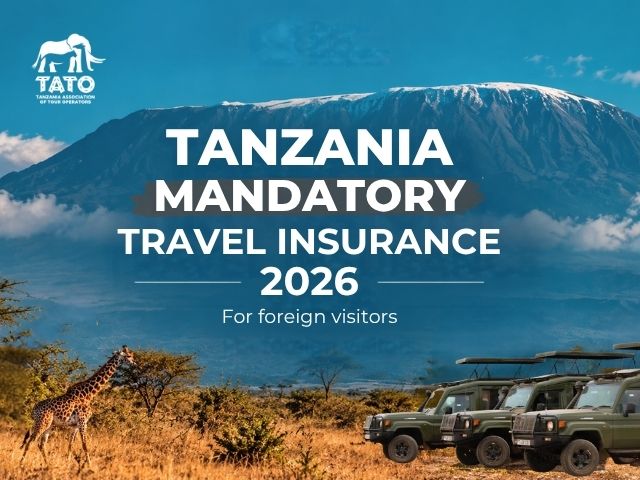
New policy establishes a standardised travel insurance requirement for international visitors entering Mainland Tanzania, with TATO supporting industry awareness, preparedness and a seamless visitor experience
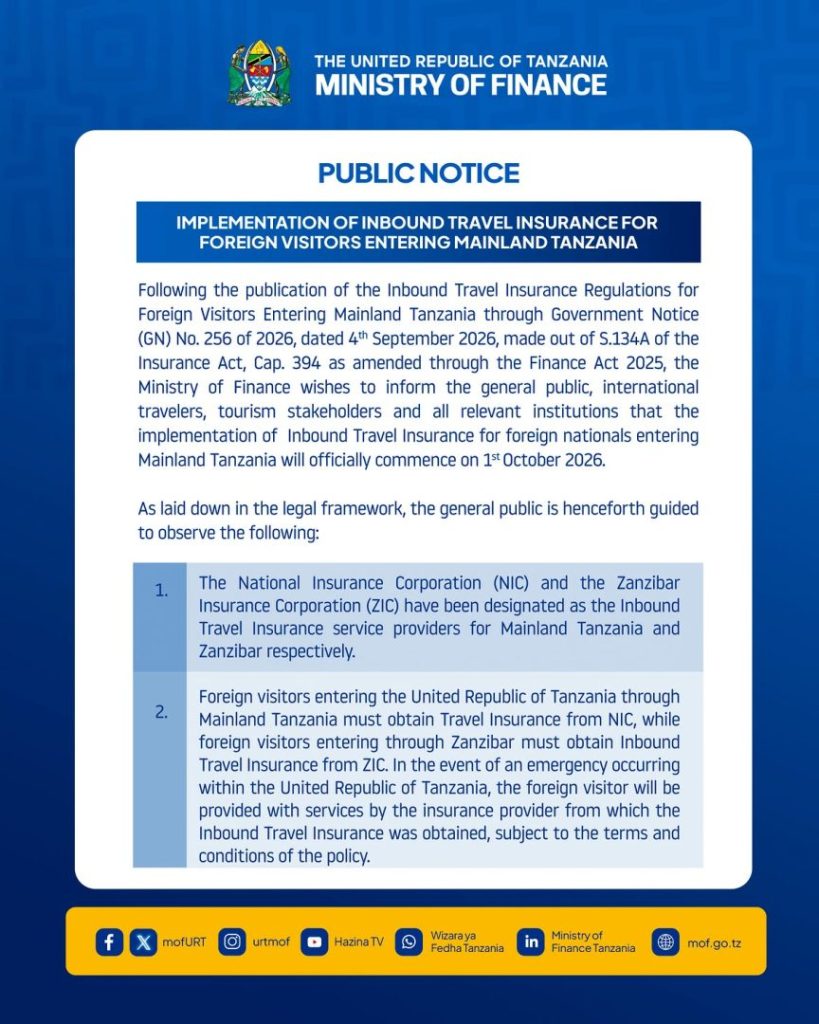
Tanzania is set to introduce a mandatory Inbound Travel Insurance requirement for foreign visitors entering Mainland Tanzania, with implementation officially commencing on 1 October 2026.
The measure follows the publication of the Inbound Travel Insurance Regulations for Foreign Visitors Entering Mainland Tanzania through Government Notice (GN) No. 256 of 2026, dated 4 September 2026, made under Section 134A of the Insurance Act, Cap. 394, as amended through the Finance Act 2025.
The Ministry of Finance has issued the public notice to inform international travellers, tourism stakeholders and relevant institutions about the new requirement and the arrangements governing its implementation.
The introduction of the insurance requirement comes at a time when Tanzania’s tourism industry continues to expand, with the country strengthening its position as a leading destination for wildlife, adventure, cultural and beach tourism.
According to the Tanzania Tourism Sector Survey Report, international tourist arrivals increased from 2,141,895 in 2024 to 2,294,495 in 2025, representing growth of 6.7 percent. Tourism earnings also increased by 13 percent to USD 4.41 billion in 2025, highlighting the increasing economic importance of international tourism to Tanzania.
Against this growing tourism environment, clear and well-communicated visitor arrangements are important to maintaining confidence and ensuring smooth travel experiences.
What the New Inbound Travel Insurance Requirement Means
Under the new framework, foreign visitors entering the United Republic of Tanzania through Mainland Tanzania will be required to obtain inbound travel insurance from the National Insurance Corporation (NIC).
For visitors entering Tanzania through Zanzibar, the designated provider is the Zanzibar Insurance Corporation (ZIC).
The Ministry of Finance has clarified that where an emergency occurs within the United Republic of Tanzania, the visitor will receive services from the insurance provider through which the inbound travel insurance was obtained, subject to the terms and conditions of the applicable policy.
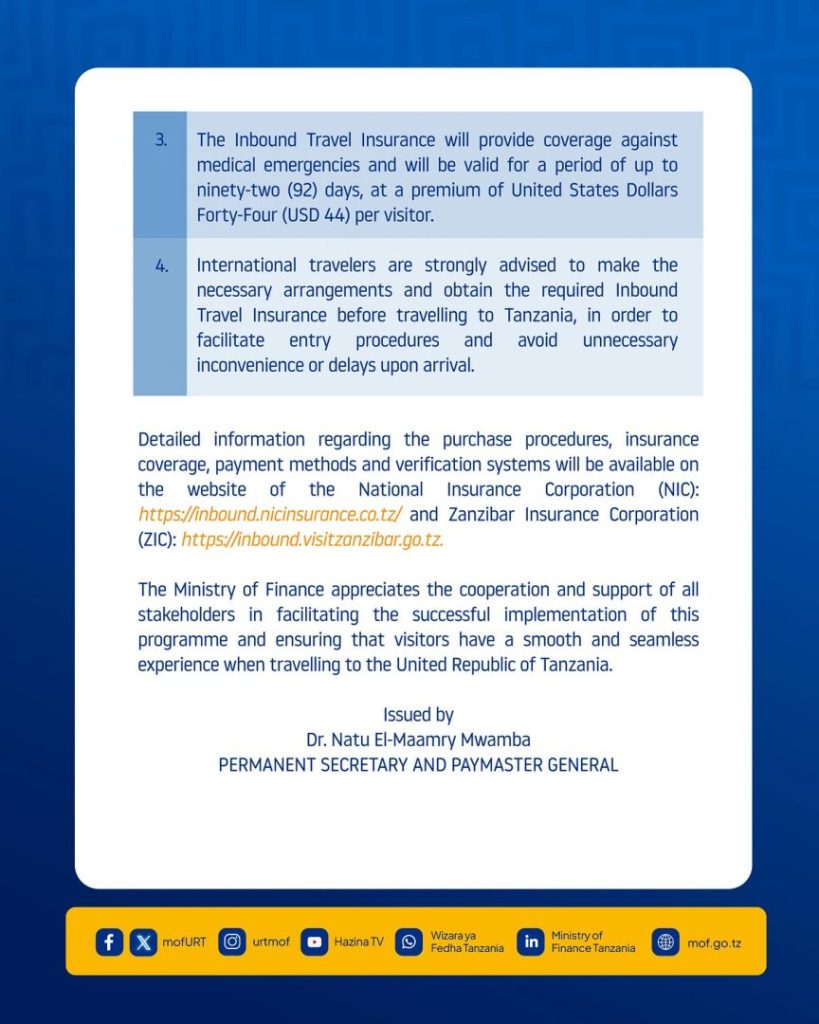
The inbound travel insurance will provide coverage against medical emergencies and will remain valid for a period of up to 92 days.
The premium has been set at USD 44 per visitor.
International travellers are therefore strongly advised to make the necessary arrangements before travelling to Tanzania in order to facilitate entry procedures and minimise possible inconvenience or delays upon arrival.
Where Visitors Can Obtain the Insurance
The Government has identified dedicated online platforms through which travellers can obtain detailed information regarding the purchase process, insurance coverage, payment methods and verification systems.
For visitors entering through Mainland Tanzania, information is available through the National Insurance Corporation (NIC).
For visitors entering through Zanzibar, information is available through the Zanzibar Insurance Corporation (ZIC).
Travellers are encouraged to rely on the official platforms and information provided by the relevant authorities when making arrangements for their journey.
What the Policy Means for Tanzania’s Tourism Industry
Travel insurance is increasingly recognised as an important component of international travel planning. For a destination receiving visitors from diverse markets, having clearly defined arrangements for handling medical emergencies can contribute to greater preparedness across the tourism ecosystem.
For Tanzania, the new framework introduces an additional requirement that will need to be clearly understood by tour operators, travel agents, airlines, accommodation providers, destination management companies, guides and other tourism service providers.
The success of the implementation will therefore depend not only on the availability of the insurance product but also on effective communication throughout the tourism value chain.
Tour operators, for example, will have an important role in informing their clients about the requirement during the booking and pre-arrival stages. Travel agents and international partners will similarly need accurate information so that travellers can make the necessary arrangements before departure.
Airlines and other transport operators may also become important channels for communicating pre-arrival requirements to passengers.
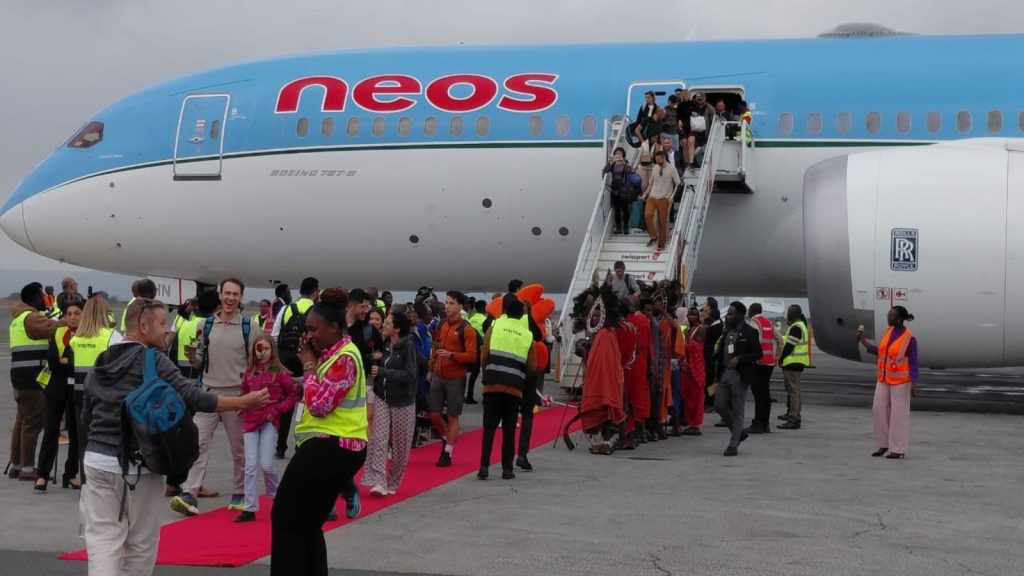
Protecting the Visitor Experience Through Clear Communication
For international travellers, changes to entry requirements can sometimes create uncertainty when information is not communicated early or consistently.
This makes timely communication particularly important.
Tour operators can incorporate the inbound insurance requirement into pre-travel information, booking confirmations, itineraries and destination briefings. Clear communication can help visitors understand:
- Who is required to obtain the insurance;
- Where the insurance should be purchased;
- The applicable premium;
- The period of validity;
- What type of emergencies are covered;
- How the insurance can be verified; and
- What visitors should do in the event of an emergency.
Such communication can help ensure that the new requirement becomes an integrated part of the travel-planning process rather than an unexpected issue at the point of arrival.
Tanzania’s Tourism Growth Makes Industry Preparedness Increasingly Important
The insurance requirement comes against the backdrop of strong growth in Tanzania’s tourism sector.
The 2025 tourism performance data shows that leisure and holiday travel remains the dominant contributor to tourism earnings. Tanzania generated approximately USD 4.23 billion from leisure and holiday visitors in 2025, accounting for 95.9 percent of total tourism earnings. The same survey found that approximately 75.2 percent of total tourism earnings came from visitors travelling under package-tour arrangements.
This demonstrates the important role played by tour operators and other tourism intermediaries in the visitor journey.
As visitor numbers grow and Tanzania continues to diversify its source markets and tourism products, coordination between the public and private sectors becomes increasingly important.
The Role of TATO: Supporting Industry Preparedness, Advocacy and Visitor Confidence
The Tanzania Association of Tour Operators (TATO) plays an important role in helping the tourism industry understand and adapt to policy and regulatory developments that affect tour operators and their clients.
As a leading private-sector tourism association, TATO provides a platform through which tour operators can engage with Government institutions and other stakeholders on matters affecting the tourism business environment and visitor experience.
In the implementation of the Inbound Travel Insurance framework, TATO’s role can be viewed through several key areas:
1. Industry Awareness and Information Dissemination
TATO can support its members with accurate and timely information regarding the new requirement, enabling tour operators to communicate the changes effectively to international clients and overseas travel partners.
Providing clear information before travellers arrive is particularly important in avoiding confusion at entry points.
2. Supporting a Seamless Visitor Experience
Tour operators are often among the first local tourism professionals to communicate with visitors after a booking is made.
TATO can therefore help ensure that its members are adequately informed about the new requirements so that insurance arrangements become part of the normal pre-arrival preparation process.
This supports the broader objective of delivering a smooth and seamless tourism experience.
3. Public–Private Sector Engagement
TATO provides a platform for continued dialogue between tourism operators and Government authorities.
As implementation progresses, engagement between the Association, relevant ministries, insurance institutions and other stakeholders can help identify practical issues affecting travellers and operators and facilitate appropriate clarification.
4. Representing the Tourism Industry’s Perspective
Tourism regulations can have operational implications for tour operators, travel agents and international partners.
TATO’s advocacy role includes communicating industry perspectives and practical experiences to policymakers and relevant authorities. This helps ensure that implementation considerations from the tourism value chain are part of ongoing stakeholder dialogue.
5. Strengthening Tanzania’s Tourism Competitiveness
A well-understood and efficiently implemented visitor insurance framework can form part of a broader tourism ecosystem focused on visitor safety and preparedness.
TATO’s contribution is therefore not limited to compliance awareness. Through advocacy, capacity building, stakeholder engagement and information sharing, the Association continues to support an environment in which Tanzania’s tourism businesses can operate professionally and competitively.

What International Visitors Should Do Before Travelling
Foreign visitors planning to enter Mainland Tanzania from 1 October 2026 should take note of the new requirement and make arrangements to obtain the prescribed inbound travel insurance before travelling.
Travellers should also ensure that they understand the terms and conditions of their coverage and retain the necessary insurance documentation or confirmation for the journey.
The Ministry of Finance has advised travellers to obtain the insurance before travelling in order to facilitate entry procedures and avoid unnecessary inconvenience or delays upon arrival.
It is equally important for travellers to use the official insurance platforms provided by the Government and designated insurance providers.
A Coordinated Approach to Implementation
The introduction of mandatory inbound travel insurance represents an important development in Tanzania’s tourism and visitor-management framework.
Its effective implementation will require coordination among the Ministry of Finance, Ministry of Natural Resources and Tourism, NIC, ZIC, immigration authorities, airlines, tour operators, travel agents, accommodation providers and other tourism stakeholders.
For the tourism industry, the priority will be ensuring that international travellers receive accurate information well before arrival and that tourism businesses are adequately prepared to guide their clients through the new process.
TATO will continue to support its members through information sharing, stakeholder engagement, capacity building and advocacy, while promoting collaboration between the public and private sectors to maintain Tanzania’s reputation as a welcoming, professional and internationally competitive tourism destination.
Conclusion
Tanzania’s introduction of inbound travel insurance for foreign visitors entering Mainland Tanzania from 1 October 2026 establishes a new requirement that international travellers and tourism businesses need to understand and prepare for.
With the premium set at USD 44 per visitor and coverage valid for up to 92 days, the framework provides a defined arrangement for medical-emergency coverage for international visitors, subject to the applicable policy terms and conditions.
For Tanzania’s tourism sector, effective implementation will depend heavily on communication, coordination and preparedness.
Through continued public–private dialogue and support to its members, TATO remains committed to helping tourism operators navigate regulatory developments, strengthen professional standards and contribute to a smooth and positive visitor experience—while ensuring that the concerns and practical realities of the private sector remain part of the wider tourism policy conversation.


1 Response Comment